Immigration Appeals and Motions
This is a selection from Zara’s dozens of immigration appeal and motion briefs. Names, dates, and other identifying details have been changed to protect privacy. Some cover pages and tables have been removed for ease of reading.
Board of Immigration Appeals (BIA), Respondent’s brief. From detention, the client was given eight days to produce the medical records corroborating hardship to his three U.S. citizen daughters. When his family couldn't manage it in time, the immigration judge denied a continuance, pretermitted the application, and ordered the client removed without taking any testimony. The brief showed: that the judge’s reliance on Matter of H-A-A-V- and Matter of C-A-R-R- was wrong because neither applied to the client’s cancellation application; that the continuance ruling skipped the good-cause analysis altogether; and that a court's own compressed calendar can't justify pretermitting an application when the schedule left insufficient time to obtain necessary evidence.
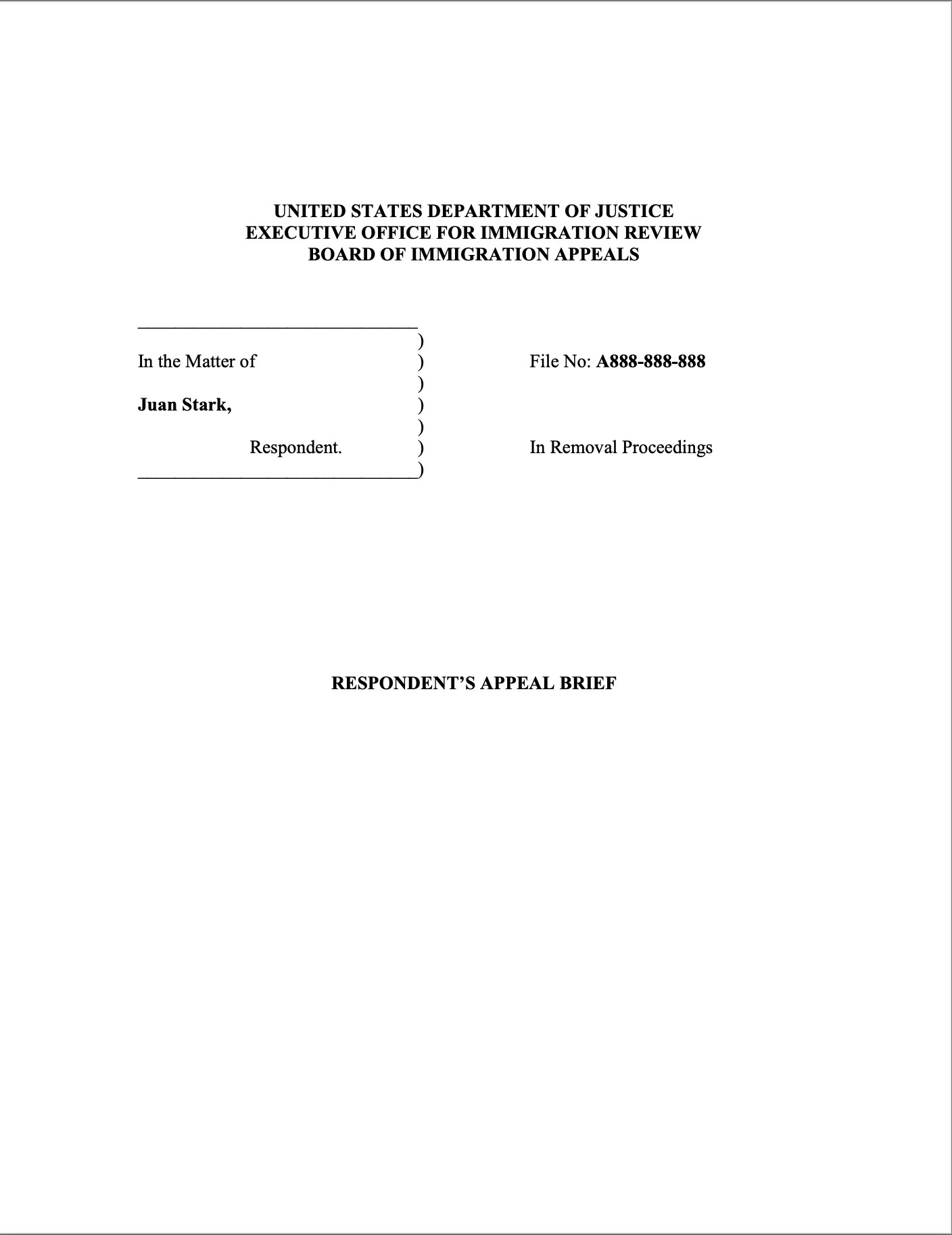
Third Circuit Court of Appeals, Appellant’s Brief. The client’s waiver was denied based on a determination that he did not enter into a prior marriage in good faith. The immigration judge applied a heightened standard of proof, and exhibited a prejudicial treatment of the client’s testimony. This appeal brief set forth the due process and evidentiary claims that required reversal of the decision.
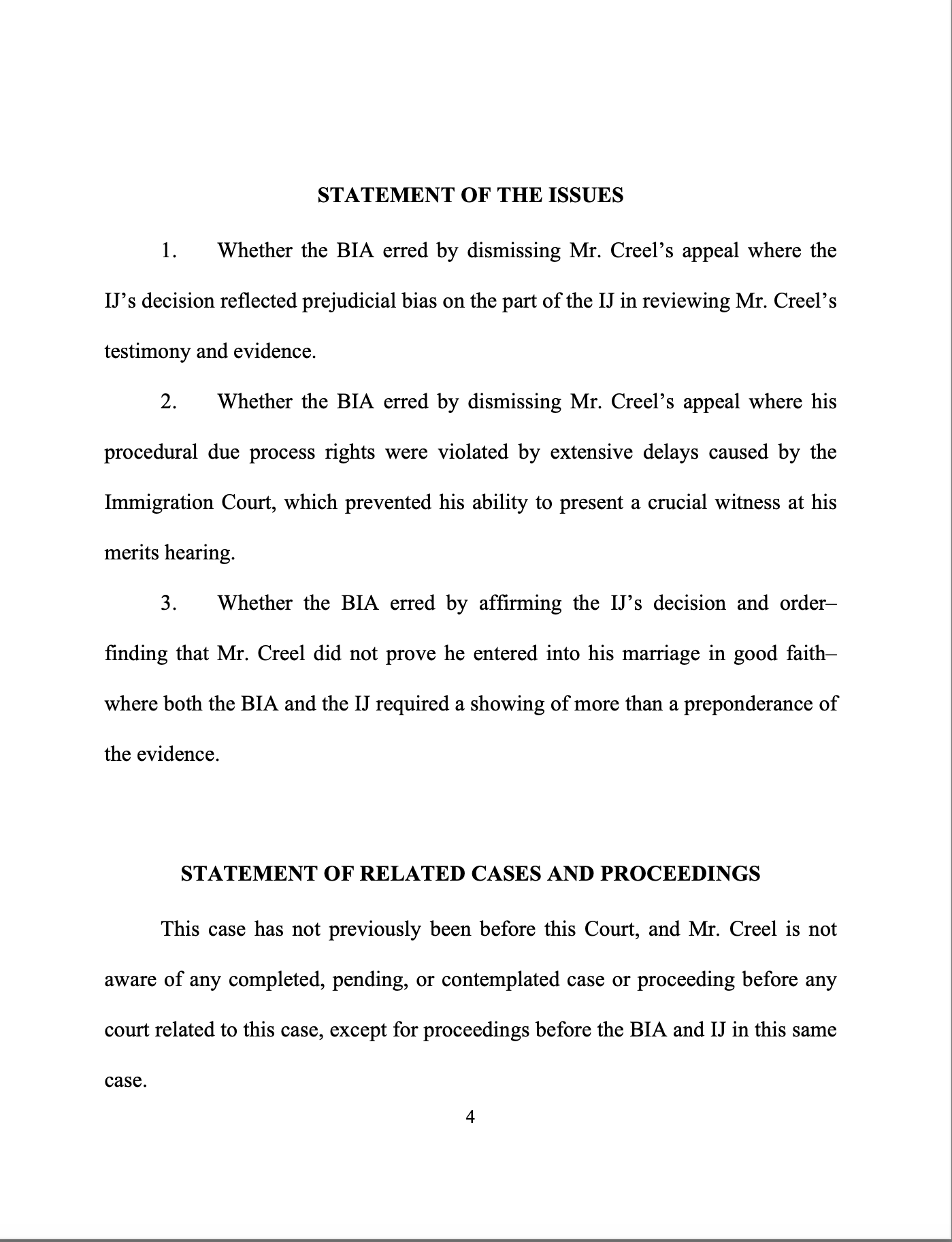
Immigration Court Motion to Reconsider Pretermitted Application. The immigration judge deemed a timely-filed asylum application abandoned, and ordered removal without a hearing, because one supporting statement arrived late. The motion showed the application had been filed two months before the deadline that supposedly triggered abandonment, and that under Ninth Circuit law as well as the Board's own precedent the only permitted consequence was waiver of that single document. Delivered as a complete packet in compliance with the Immigration Court Practice Manual: affirmation and legal brief; cover page; certificate of service; supporting-documents index; and proposed order.
Administrative Appeals Office, Petitioner’s Brief. The USCIS denied a new-office L-1A extension on five separate grounds. To show why the USCIS was wrong, the brief addressed each ground: the receivables and unfilled purchase orders the Field Director had passed over in finding the company was not "doing business"; the statutory definition of executive capacity measured against the actual allocation of duties; and the absence of any rule requiring someone already in the United States to obtain a visa abroad before starting work.
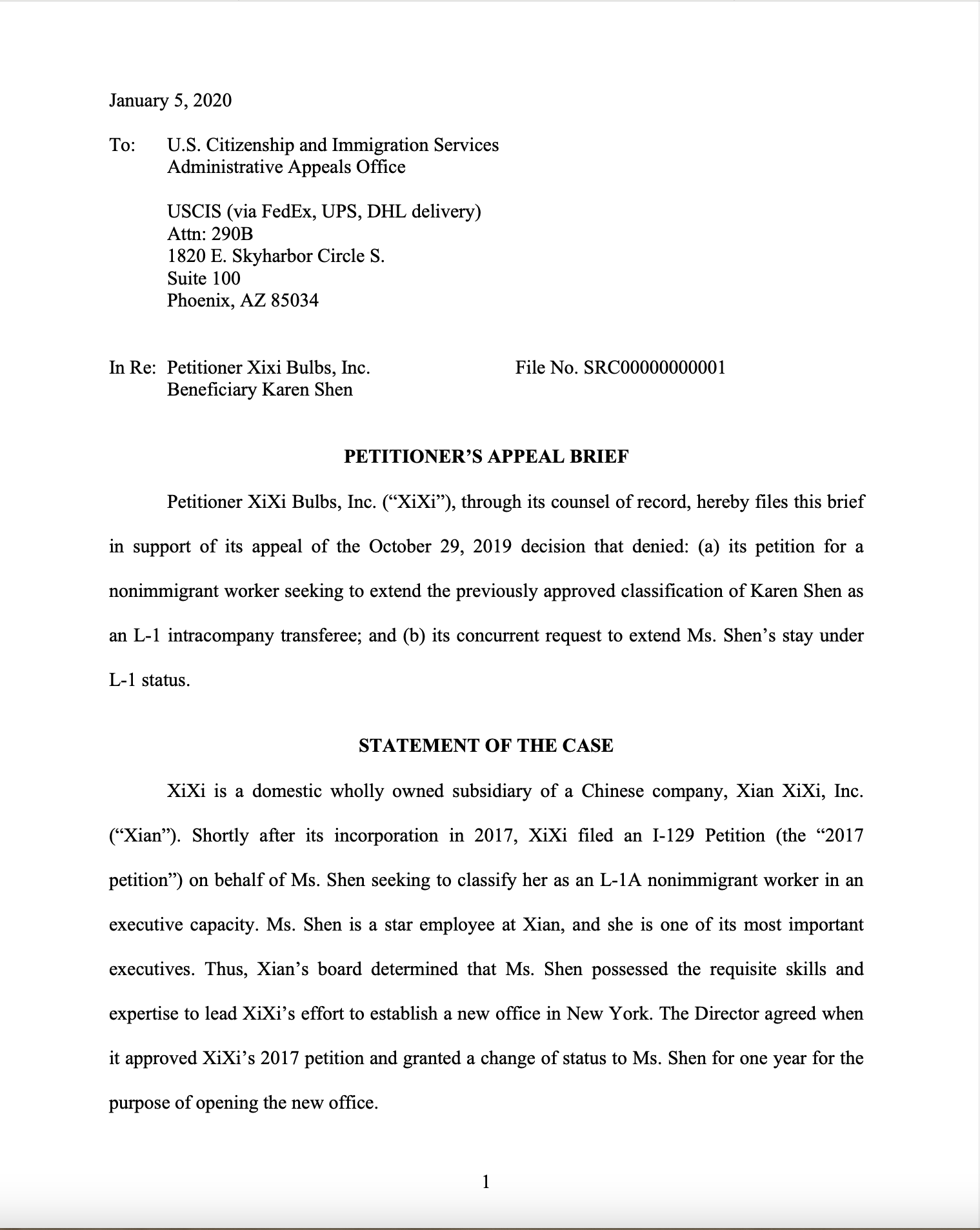
Board of Immigration Appeals, Respondent’s brief. The client was caught in a tangle of changing bureaucratic forms and standards. This brief explains why the immigration judge got it wrong when they held the stop-time rule applies to disqualify a non-citizen from suspension of deportation based on an Order to Show Cause that was issued in 1989.
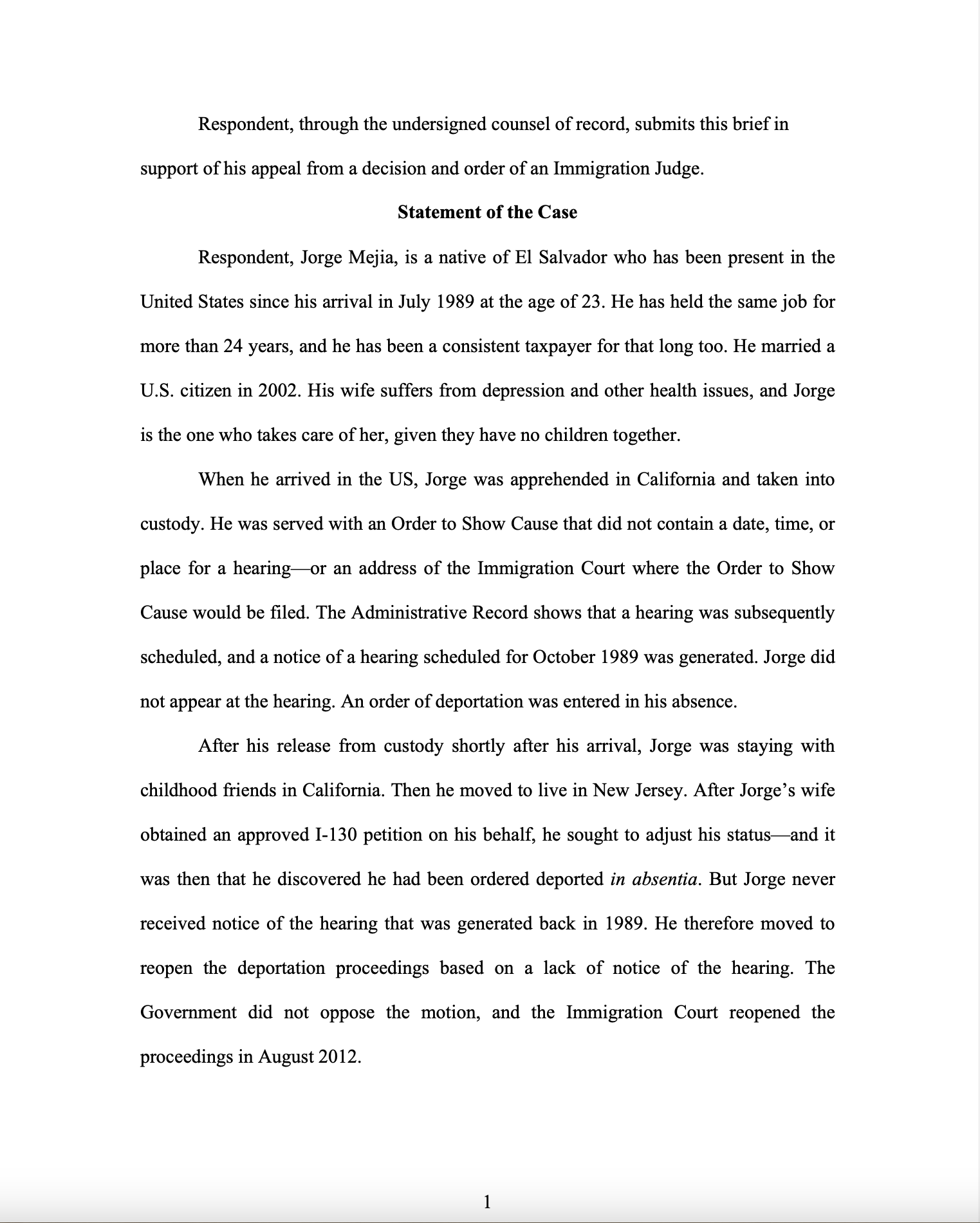
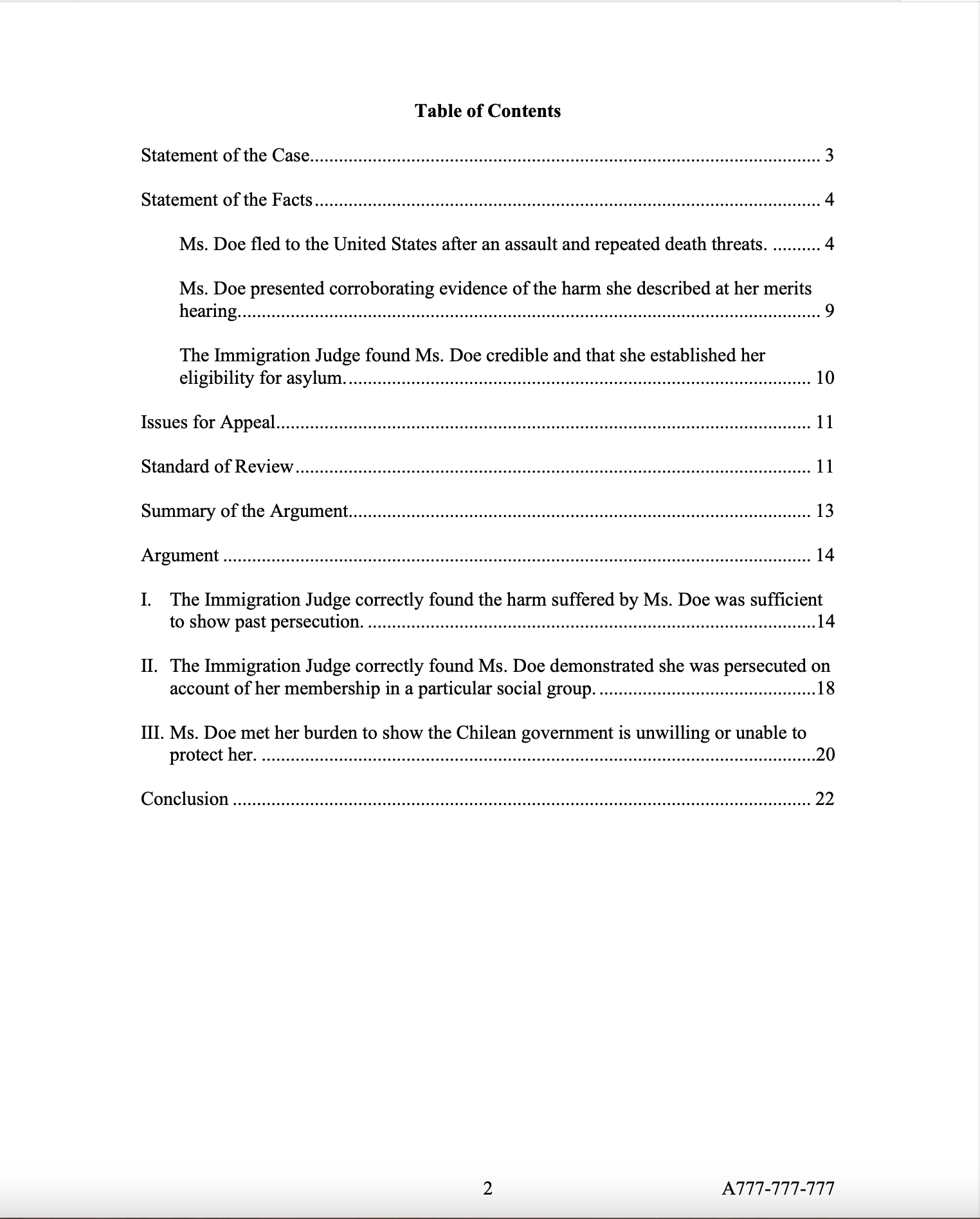
Board of Immigration Appeals, Respondent’s Brief Opposing DHS Appeal. This one was a win to protect rather than a loss to undo. The immigration judge granted asylum; DHS appealed, calling the harm mere harassment and the social group overbroad. The Respondent’s opposing brief applied the cumulative-effect rule governing threats and assaults and pointed out that DHS had put in no evidence at all — leaving the Board nothing it could call clear error.
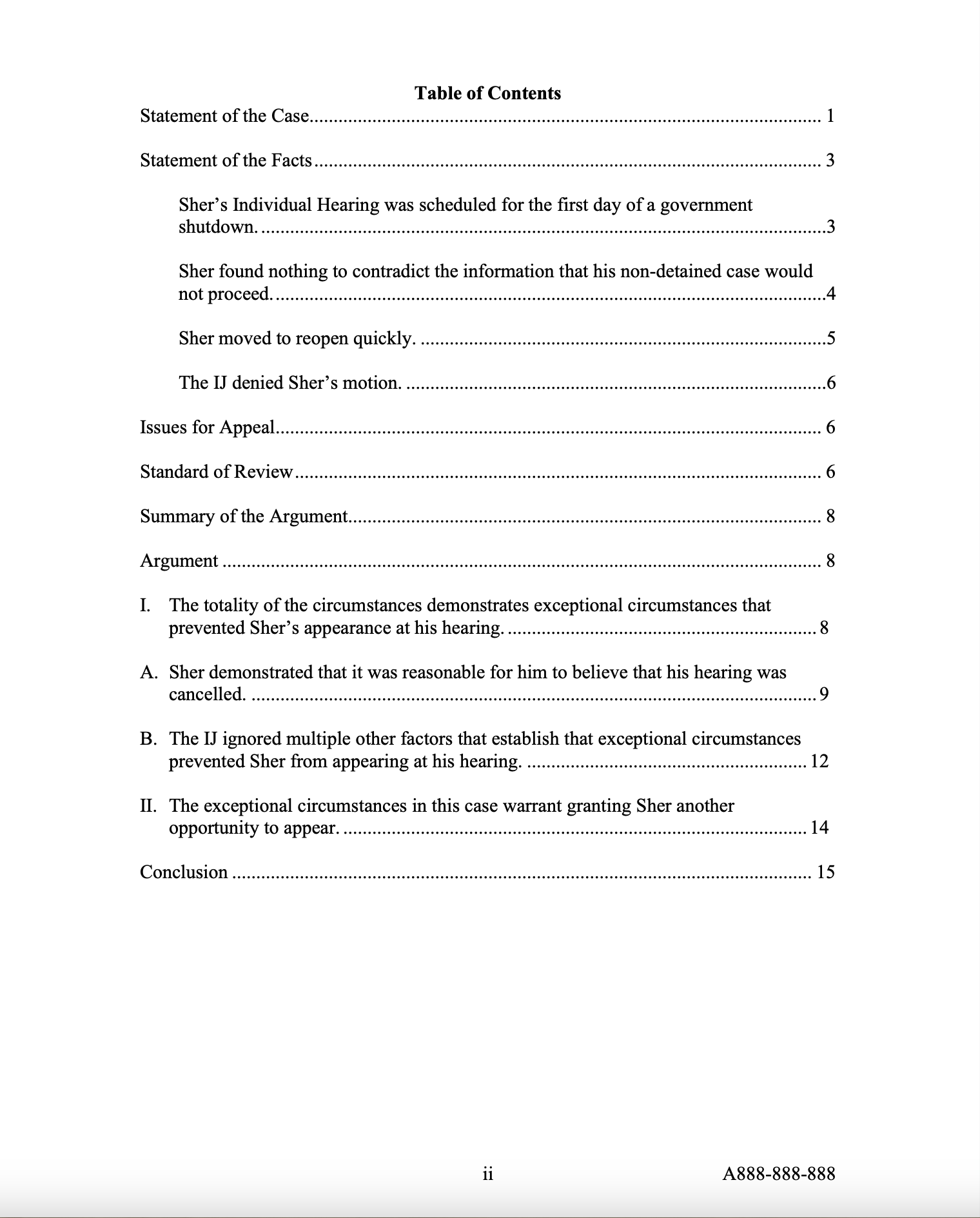
Board of Immigration Appeals, Respondent’s Brief. Our client missed his individual hearing on the first morning of a government shutdown, when the Department of Justice's own contingency plan and nearly every practice advisory indicated non-detained cases would be rescheduled. The immigration judge called that belief unreasonable and unsupported. The brief assembled the contemporaneous record to show it was a good faith belief based on the available evidence – and the judge had skipped the totality-of-circumstances factors the Board requires.
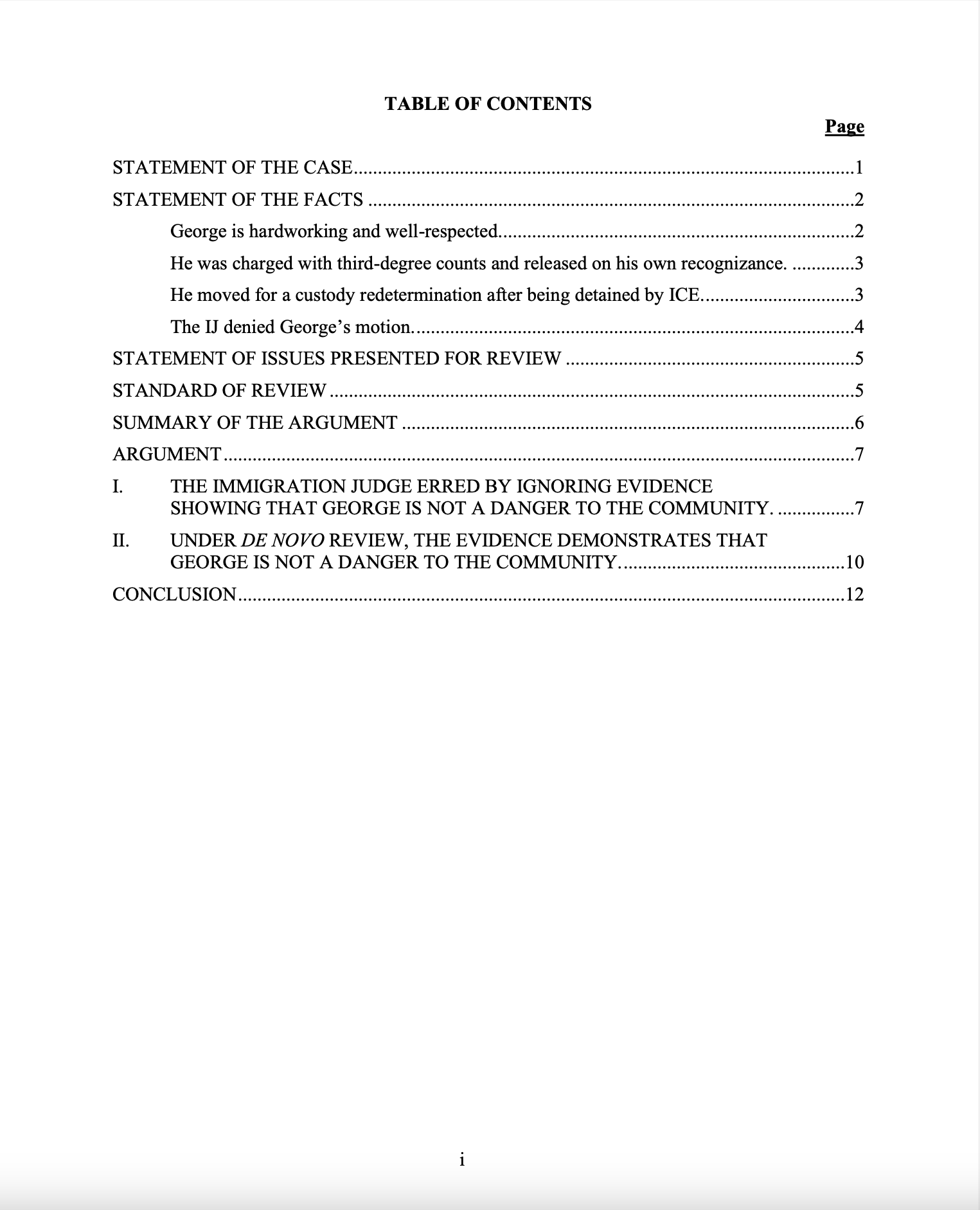
Board of Immigration Appeals, Respondent’s Brief. A state court rated the client lowest-risk and released him on his own recognizance; ICE detained him at the door. The immigration judge agreed he was no flight risk but found him a danger to the community because he had not detailed the underlying charges — which the Fifth Amendment entitled him not to do. The brief showed that the judge had passed over the safety assessment, criminal counsel's letter, and a dozen character letters.
Board of Immigration Appeals, Respondent’s Brief. The immigration judge found the client not credible and denied asylum. The brief showed that each claimed inconsistency was either explained on the record or too slight to carry an adverse finding, and that the law governing family-based social groups and anti-gang political opinion had shifted since the decision — requiring a remand for fresh factfinding rather than an affirmance.