Complex Motions
This is a selection from Zara’s hundreds of motion briefs. Names, dates, and other identifying details have been changed to protect privacy. Some covers have been removed for ease of reading.
United States Supreme Court, Petition for Review. Foreign workers brought in for unskilled construction work sued their employers under the False Claims Act’s reverse-claim provision. They alleged that the employers obtained a cheaper visa category the work did not qualify for, and so knowingly avoided the higher fees the correct visa required. The District Court and the Ninth Circuit held that the claim lacked merit because the unpaid fee was not an “obligation” to the government. The petition presents a conflict with the Tenth Circuit and the legislative history behind it, and it emphasized the stakes of the Ninth Circuit’s reading, which would undercut the government’s multimillion-dollar visa-fee settlements under the same provision.
New York Appellate Division, First Department, Motion To Reargue and For Leave to Appeal. Before his death, a cooperative apartment owner told his nephew, who was holding a newly issued share certificate, to keep the apartment. The co-op refused to recognize the gift, the Supreme Court, New York County, ruled in favor of the nephew, but the First Department reversed and dismissed his claim under the statute of frauds. This motion argued that the court had applied a rule that was meant to apply to sales to a transfer by gift. It also argued that the decision resolved disputed questions of donative intent and delivery that belonged to a trier of fact. For the Court of Appeals, it framed the issue as one of statewide importance, given how common co-ops are in New York.
New Jersey Appellate Division, Motion for Leave to Appeal. Most interlocutory appeals are not automatically appealable in the New Jersey Appellate Division. This motion sought leave to appeal from a discovery order in a disputed sidewalk slip-and-fall case, relying on doctrines like the “Best Practices” rules, the diligence requirement, and the prejudice inured to the party who complied with its discovery obligations while the other party did not.
California Court of Appeals, Motion for Judicial Notice. Several defendants in a medical malpractice action moved for summary judgment on the same grounds. One judge granted the treating doctors’ motions, and the plaintiff appealed from the resulting judgments. Months later, a different judge denied the lead surgeon’s motion, though it raised the same arguments. The motion asked the appellate court to take notice of that later ruling, so the panel would see the inconsistency on the record.
New York Eastern District, Motion for a New Trial. Rule 59 motion to set aside a defense verdict and for a new trial for damages suffered by a pedestrian who fell in a pothole in a restaurant parking lot. The jury found that the pothole existed and that the owner was negligent, but also that the pothole was not a substantial factor in the fall. The brief showed that the verdict was inconsistent and based on juror confusion.
New York Southern District, Bankruptcy Court, Opposition to Trustee’s Motion. The trustee wanted to administer the debtor’s expected settlement from a product-liability suit over an implanted medical device. The trustee’s theory was that because the device was implanted before the bankruptcy, the claim belonged to the estate. The opposition argued that a claim existed when the device caused harm to the debtor, not when it was implanted, and the harm occurred years after the bankruptcy case closed.
California Superior Court, Opposition to Demurrer. In a dispute between two neighbors over dying birch trees bordering their property, the defendant filed a demurrer invoking the privilege privilege. This opposition attacks the argument and argues a demurrer must negate an element, not dispute the facts.
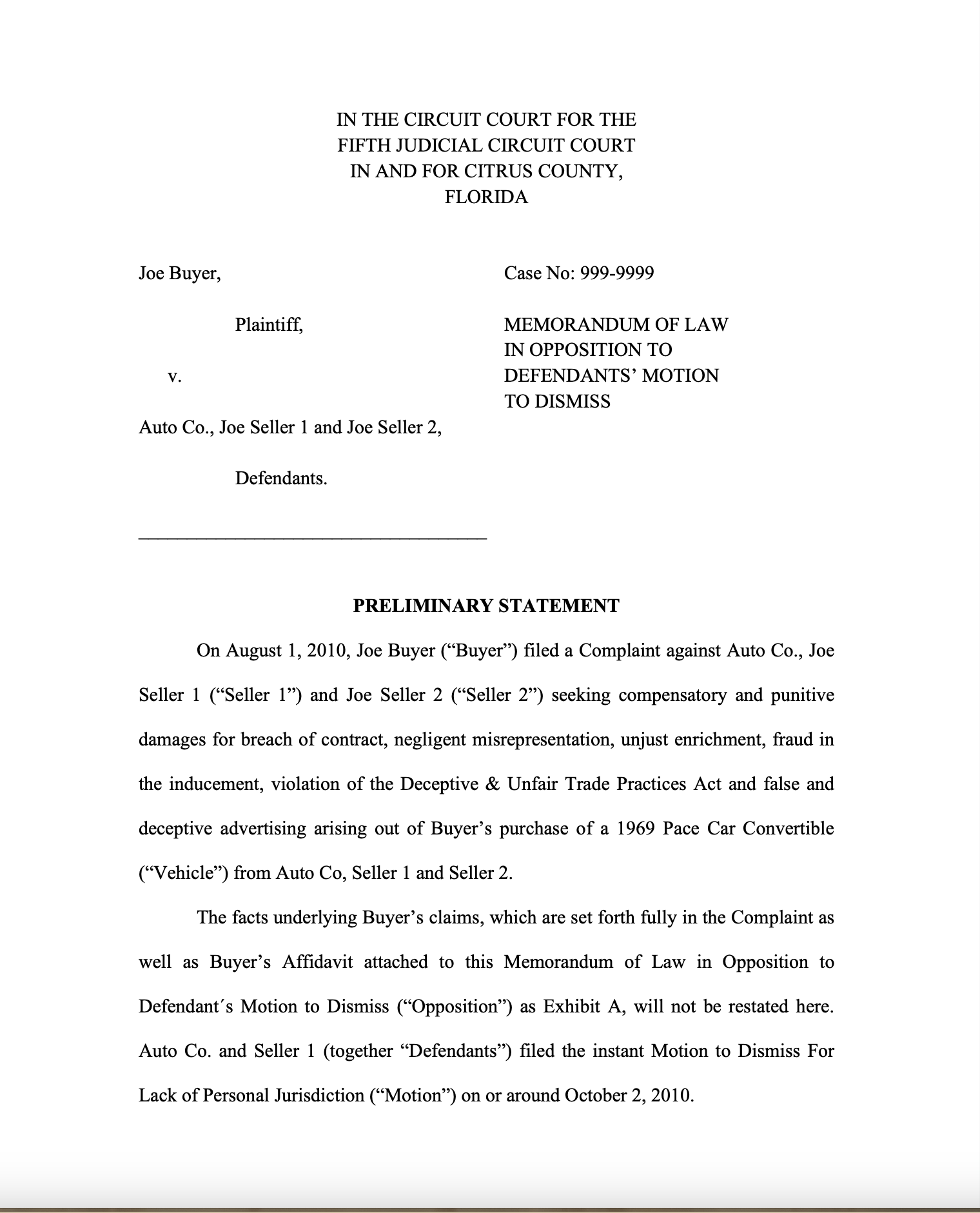
Florida Fifth Judicial Circuit Court, Opposition to Motion to Dismiss. A Florida buyer sued out-of-state sellers for fraud, misrepresentation, and deceptive trade practices, and the sellers argued Florida courts could not reach them. The opposition shows that both parts of Florida’s two-part test for long-arm jurisdiction were satisfied.
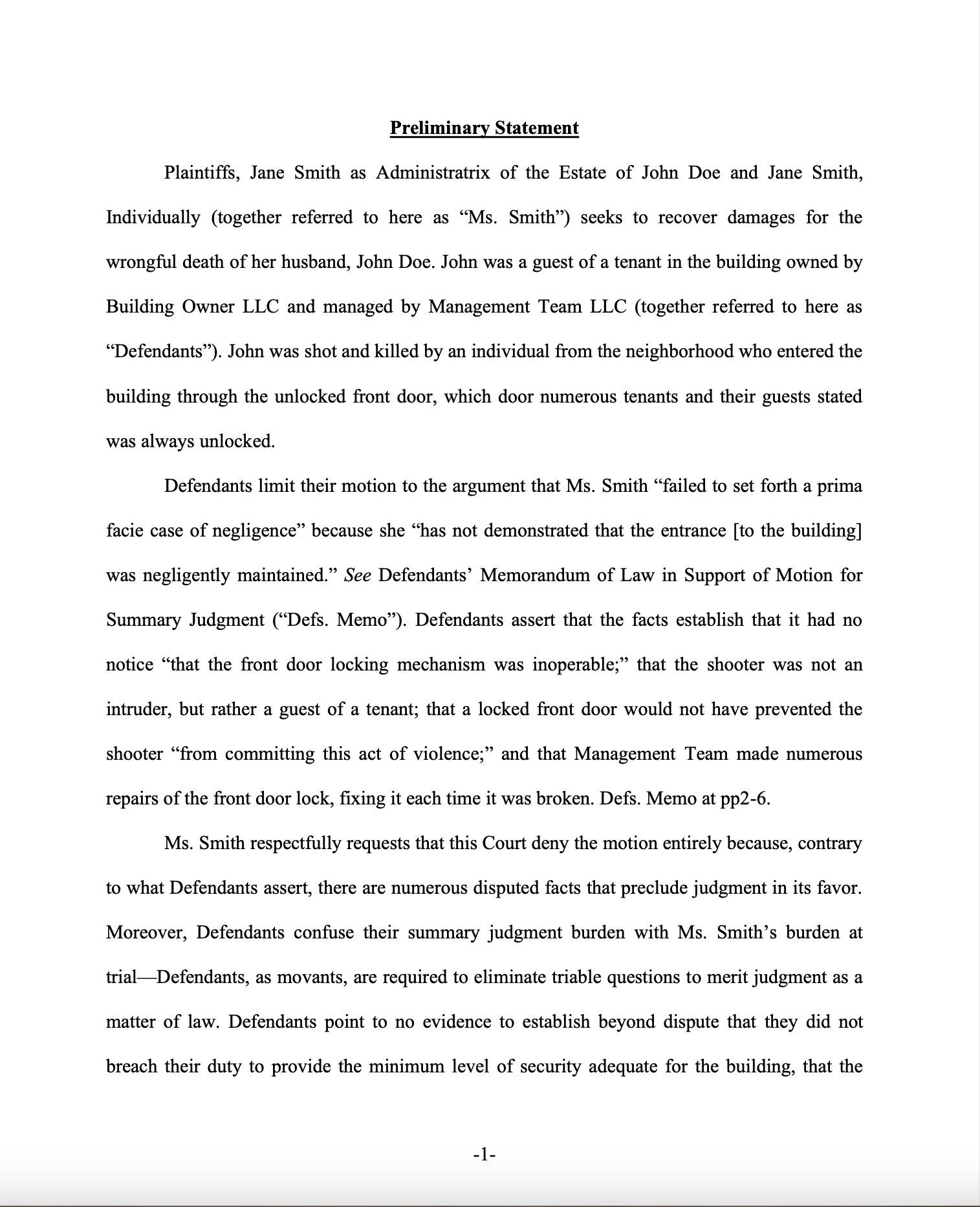
New York Supreme Court, Opposition to Defendant’s Motion for Summary Judgment. In a wrongful-death action against an apartment building’s owner and manager, the defendans moved for summary judgment arguing that it complied with its duty as a landlord. The opposition marshaled the facts – regarding broken locks, self-locking-doors, and tenant inviting the assailant into the building – to point back to defendants’ burden as the moving parties and demonstrate there were triable questions of fact.
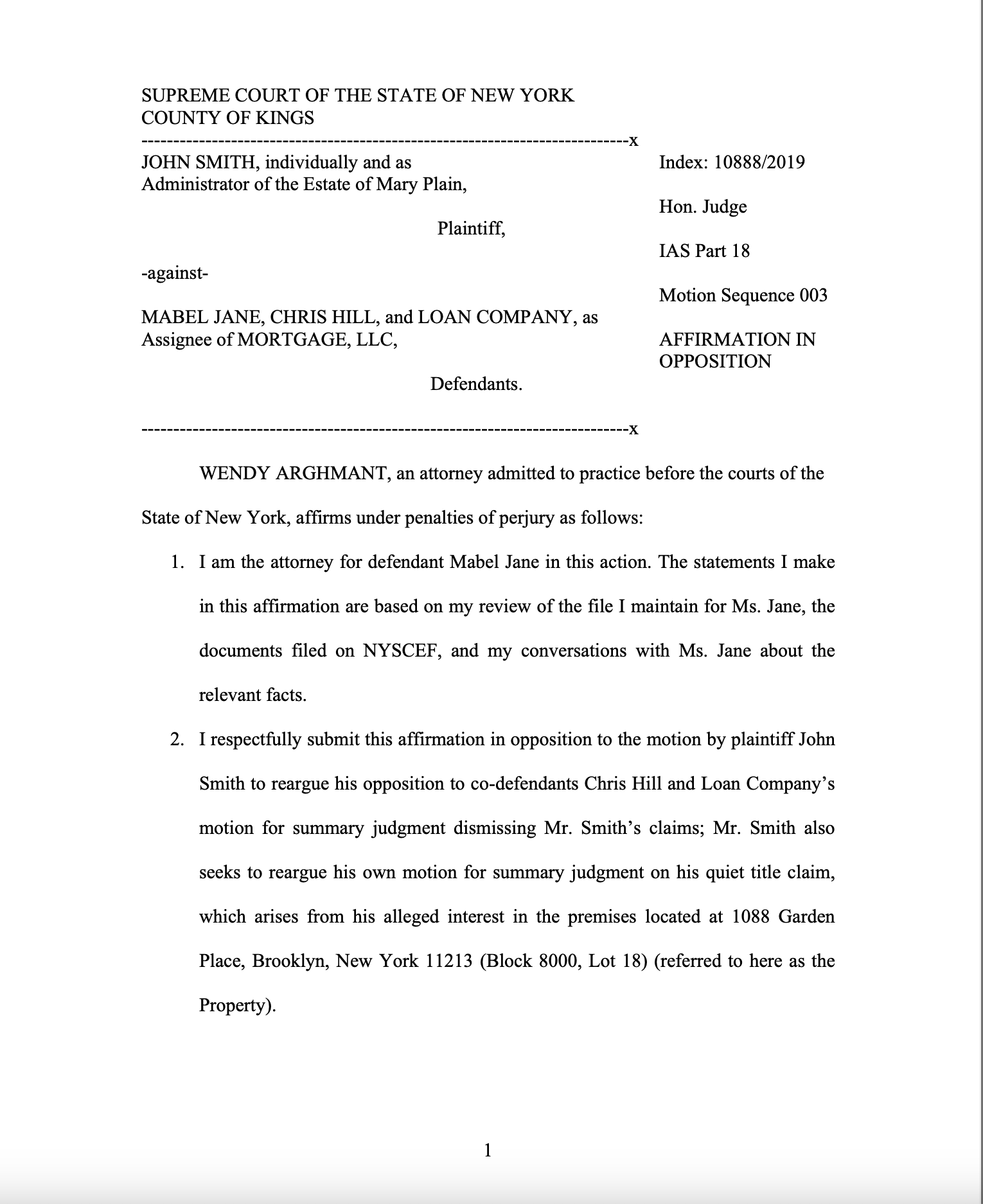
New York Supreme Court, Opposition to Plaintiff’s Motion to Reargue and Stay Pending Appeal. The plaintiff lost his summary judgment motion on his claim to quiet title based on an allegedly forged deed. He appealed and also moved to reargue and stay further proceedings. With this opposition, the defendant defeated plaintiff’s attempt because he failed to meet the applicable standard for either reargument or a stay.
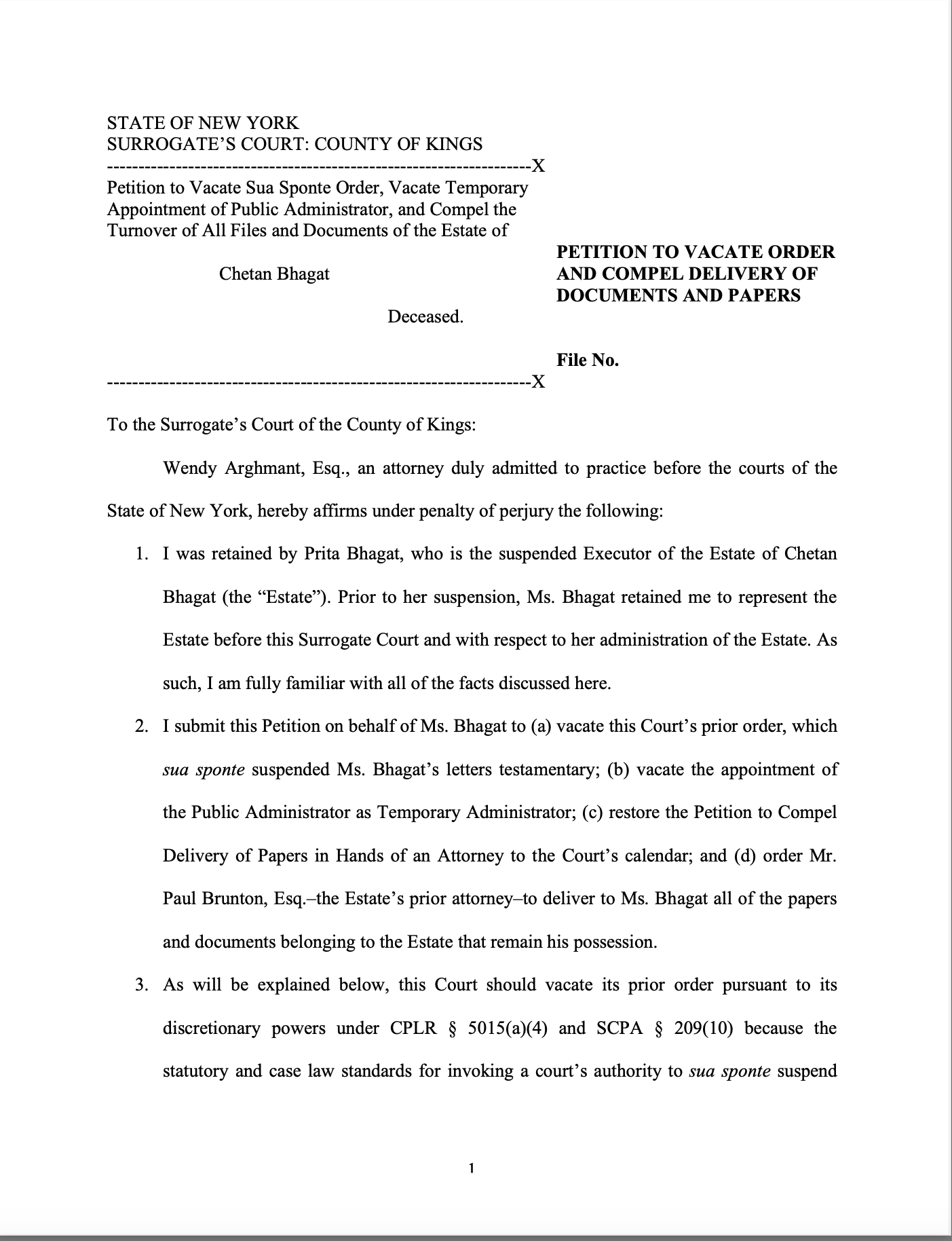
New York Surrogate’s Court, Petition to Vacate Surrogate Court Order. The Surrogate sua sponte suspended an executrix’s testamentary letters and appointed a Public Administrator. This petition showed that the Surrogate did not meet the standard for exercising discretionary authority, requiring reinstatement of the executrix.
New York Research Memo on Motions to Change Venue. The client wanted to know how best to oppose a motion to change venue filed by defendants after plaintiff selected venue in New York County. The memo answers the question the client was really asking, which is what it would take to stay in the venue plaintiff where it commenced the action.