

COMMENTARY ON LEGAL PRACTICE AND WRITING
These posts are not updated and are not a statement of current law.

Appeal Pro Tip: Don't wait until the week (or month) before your deadline.
As an appellate attorney, I get many last minute requests for help. Read on for a story about why waiting until the last minute to get help with your appeal is a terrible idea.

New: Filing BIA Briefs by Email
Spurred on by the coronavirus, the BIA (Board of Immigration Appeals) joins us in the 21st century with a new rule permitting email filing of briefs.

Spotlight on Work-Life Balance
I’ve been an adventurous traveler, ardent yoga practitioner, and aficionado of literature since my school days. When I started my career as a lawyer—almost two decades ago—I gave none of it up. How do I manage to have both a successful law practice and a satisfying life? I explained it all in a recent interview with LexisNexis for their Attorney Spotlight series. Click through to read more.

More than just "tips for working from home."
By now you’ve read dozens of “how to work from home” blog posts. This is not one of them. We need more than tips on how to setup a workspace or what to wear on a Zoom call. We need tips on how to work at all during this time of extreme uncertainty when so much business just screeched to a halt. This post shares a few habits I have been incorporating to moderate my anxiety and stay moderately productive during this pandemic (aka, the Time of Corona).

The #1 way to avoid attorney burnout (still).
I was feeling burnt out, then I spent three weeks in Colombia. It reminded me that a vacation is still the #1 way to deal with burnout (as a lawyer or any other professional). If you are hesitating, don’t. You deserve to rest and to play. If you want some inspiration, check out the photos I took while I was away.

Big Little Wins–Part 2 (the Rule of Law)
In a big little win this year, Zara used her rapid-fire power of persuasion to convince the motion clerk at the Appellate Division that her client's cross-motion papers were properly filed before the deadline set forth in the rules.

Big Little Wins–Part 1 (Foreclosure Complaint Dismissed!)
In a big little win this year, I helped a foreclosure defense attorney get a summary judgment order reversed–and a bank’s complaint dismissed–in an appeal to the First Department (of the New York Appellate Division). Keep reading to learn about the arguments I made.

How to stay calm for the Bar Exam.
Maybe you took the Bar Exam years ago. Maybe you are studying for it now. Maybe you know someone about to undergo this famously anxiety provoking test. Maybe it’s you. Read on (and share) these tips on how to stay calm.

Read. Your. Mail.
So many appeals I've worked on would have been unnecessary if a client had simply read their mail. In my experience, the law is extremely unforgiving of the not uncommon tendency to ignore what turns up in your mailbox. So be advised: always read your mail. If you’re not convinced, read on to see exactly why.

Be kind to your judges.
Despite what you might think of the judge overseeing your case, they are only human. And the heavy burden of 21st century caseloads understandably puts a strain on them. Everyone appreciates kindness. Here are five ways to be kind to your judge.
A 5 Minute Meditation Practice for Your Busy Schedule
The single best method I have used over the years to manage a stressful workload is meditation. It’s an effective tool that ensures my mind is clear enough to process huge amounts of information and turn it all into persuasive argument-making. I practice it every day. Keep reading for how you can too.
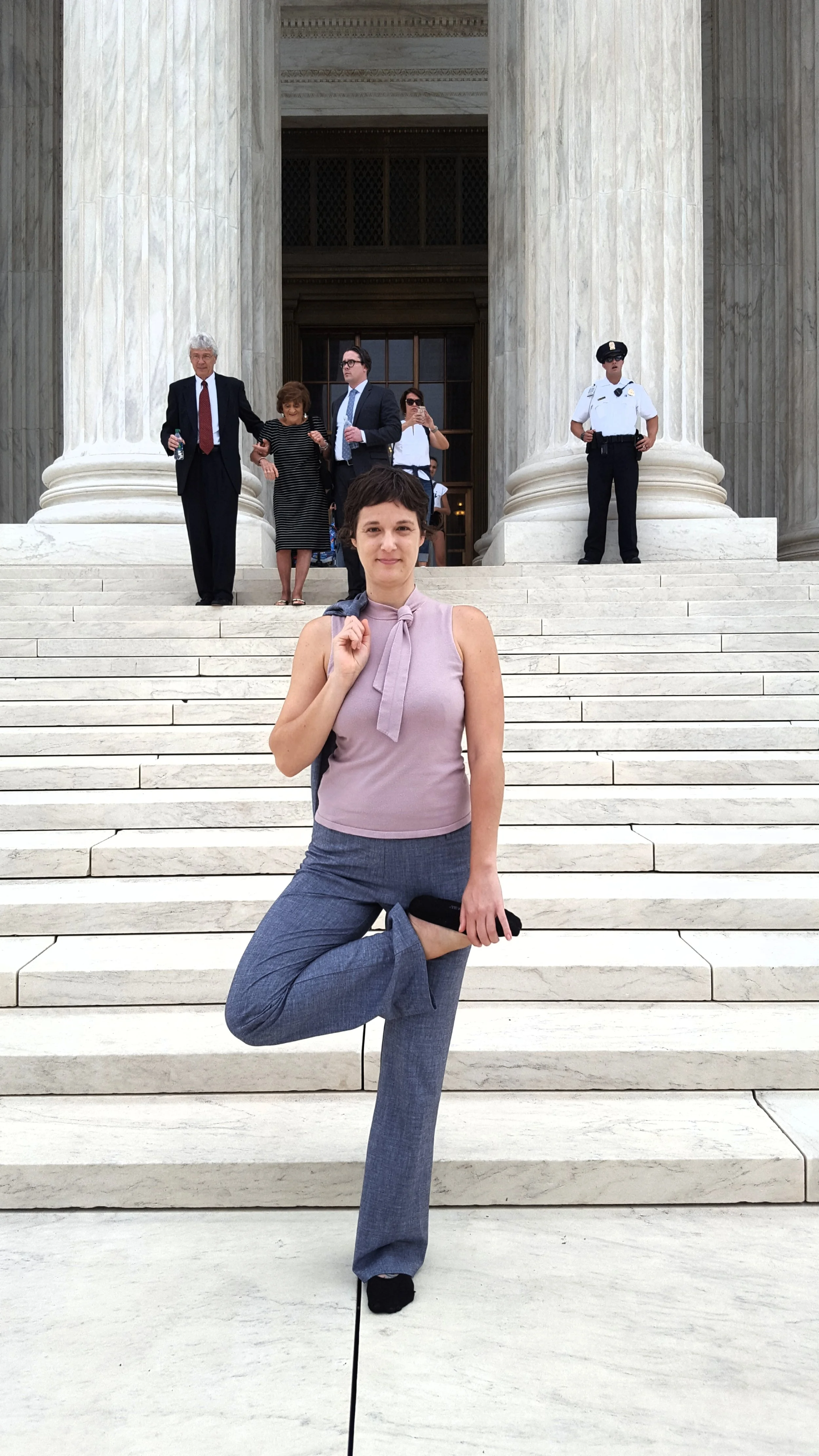
The Best Advice I Didn't Take (and how it led to my admission to the Bar of the U.S. Supreme Court)
As a young attorney, I was once told to drop all “illusions of grandeur” and focus on making a living. It was sage advice–for then. These days I allow illusions of grandeur to inspire my goals, which is what some like to call “thinking big.” It’s a far more interesting way to proceed–in both life and in a career. And it led me to gaining admission to the Bar of the U.S. Supreme Court this Spring. Keep reading to see how it went.

Lawyers: you should use more humor.
We lawyers can be a dour bunch. But we don’t have to be. I try to use humor in my oral and written arguments as much as possible. Keep reading to find out why you should too.

How I streamlined my (brief) writing process.
Over (my very busy) summer, I had four appeal briefs due in two weeks. Read about how I got it all done without losing my mind. Hint: it involved a tightly streamlined writing process.

Be a stickler for the (state and federal) rules.
We lawyers work within the rule of law; so we necessarily work with a ton of rules. Love it or hate it, your success as a litigator depends on knowing which procedural rules apply to your case (and making sure you follow them precisely). In this post, I share my two part method for navigating the sea of rules in state, federal, and immigration courts that ensures neither my papers nor my arguments are rejected because I missed an applicable rule.

Let's be clear about immigration.
It's our job as lawyers to be clear and precise. Let's take our job more seriously with respect to the President's new Executive Order on immigration.

Unlock your writer's block.
Raise your hand if you are a lawyer who does NOT get writer's block. Anyone? I thought so. Keep reading cause this post is for lawyers who battle the block and want to know how to unlock it.

Be a more effective lawyer by organizing these 3 areas.
To be an effective lawyer, we must present our arguments logically–but that is impossible to do without meticulous organization. Read on for 3 areas where being organized is crucial to success.

Changing the US Postal Service presumption
Why should the court insist your mail was delivered when the post office keeps losing it?
When is a case too old to cite?
Is it good lawyerly judgment to cite a case from the 1800s? In this post I tell you how far back you should go–and what else you should do–to find persuasive case law.